I appreciate when residents raise thoughtful questions about how the Short-Term Rental (STR) license cap affects Folly Beach’s finances. It’s an important conversation, and one that deserves accurate context. But some of the numbers being shared online don’t quite match Folly’s real financial picture. Here’s what the data actually shows and why the cap continues to make sense for both our community and our long-term fiscal health. The STR cap isn’t the cause of a financial problem — it’s part of a balanced approach to protect what makes Folly special.
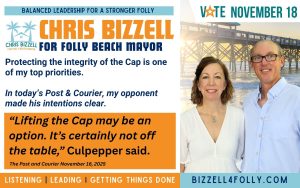
I’ve been out front on this issue from the beginning — never proposed amendments to weaken the Cap, fought efforts to exclude HOAs, and consistently supported the Cap as a way to maintain balance in our community and protect the unique character of Folly that makes it so special .
Folly’s revenues are strong.
The City of Folly Beach collects both accommodations taxes (A-Tax) and hospitality taxes (H-Tax). These funds support tourism services, public safety, and infrastructure — and they’ve continued to rise since the STR cap was enacted. While the number of registered ISTR licenses has fallen from 956 in 2023 to 925 in 2025, total A-Tax collections from city, county, and state sources grew from about $3.1 million in FY 2022 to more than $3.8 million in FY 2024 — a 22% increase. That’s clear evidence that Folly’s tourism economy remains healthy even as we manage STR growth responsibly.
Property taxes don’t disappear when a home stops renting.
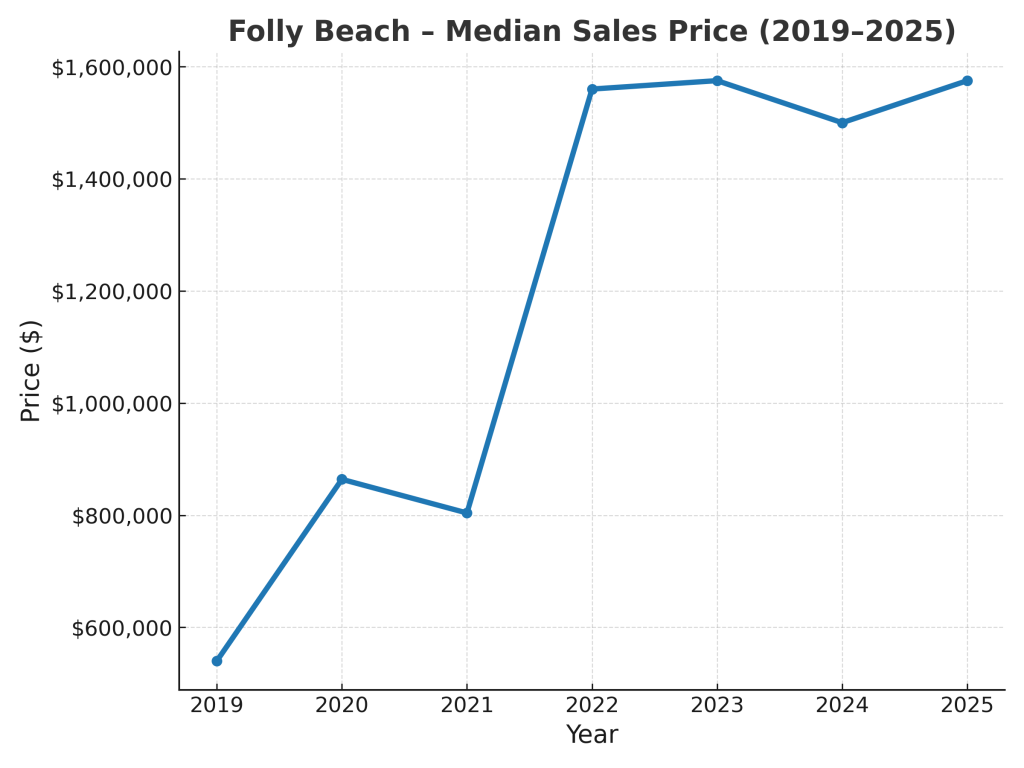
When a property moves from a 6% rental classification to a 4% owner-occupied or second-home status, the tax rate changes — but the assessed property value stays the same. And property values in Folly have risen sharply. Median home values have nearly doubled since 2019, from roughly $657,000 to around $1.35 million, with average sales prices over $1.5 million. That appreciation means the city continues to see strong property tax revenue, even if some properties shift away from short-term rental use.
The $33,000 per house example doesn’t reflect city-level reality.
A few social media posts have claimed that losing 100 STRs could mean $3.3 million in lost revenue. That figure dramatically overstates the impact. Much of the $24,000–$30,000 “taxes and fees” estimate includes state and county taxes, not money the City keeps. The city’s portion of that figure is relatively small — primarily the local license fee plus its share of A- and H-Tax collections. So even if some licenses eventually phase out, the fiscal impact to the city budget is nowhere near the millions being suggested.
Folly Beach’s most recent audits of financial statements show growth in the general fund balance year over year of $2.6M in 2024, $958K in 2023, and $3.2M in 2022….expectation are continued growth in our balance. – City of Folly Beach
Occupancy, not just unit count, drives revenue.
As discussed in my article “Folly Real Estate Values & A-Tax: A Look at the Numbers”, the number of STRs matters less than how often they’re booked. High occupancy and strong nightly rates continue to generate healthy A-Tax and H-Tax revenues. Folly’s tourism appeal hasn’t slowed down — and that means our city revenues remain stable even with a responsible cap.
A reduction in STR units can also lead to increased occupancy at hotels and other licensed accommodations. When fewer homes are available for short-term rental, visitors naturally shift toward existing hotels, inns, and boutique lodgings. This helps maintain tourism spending, keeps local hospitality businesses strong, and ensures that A-Tax and H-Tax revenues remain stable or even rise. In other words, visitor demand doesn’t disappear — it redistributes within our local economy.
The cap protects livability & preserves long-term value.
The goal of the STR cap is to keep Folly livable, balanced, and sustainable. Neighborhood quality and community character are what make this island valuable — for residents, visitors, and property owners alike. When we protect that balance, we’re protecting the foundation of our real estate values and long-term financial health.
Transparency and planning are essential.
I agree that ongoing analysis of STR impacts should be part of city planning. Folly already reports A-Tax and H-Tax collections publicly, and continued review of these trends will help guide decisions about future budgets and policies. But the data today tells a clear story — our city is financially stable, and the STR cap is doing exactly what it was meant to do: keeping Folly Beach a strong, balanced, and thriving community.
Folly’s revenues are healthy, our property values are strong, and our quality of life remains high. As Mayor, I will always work to defend the integrity of the Cap. That’s what responsible leadership looks like, planning for the future while protecting the community we all love.